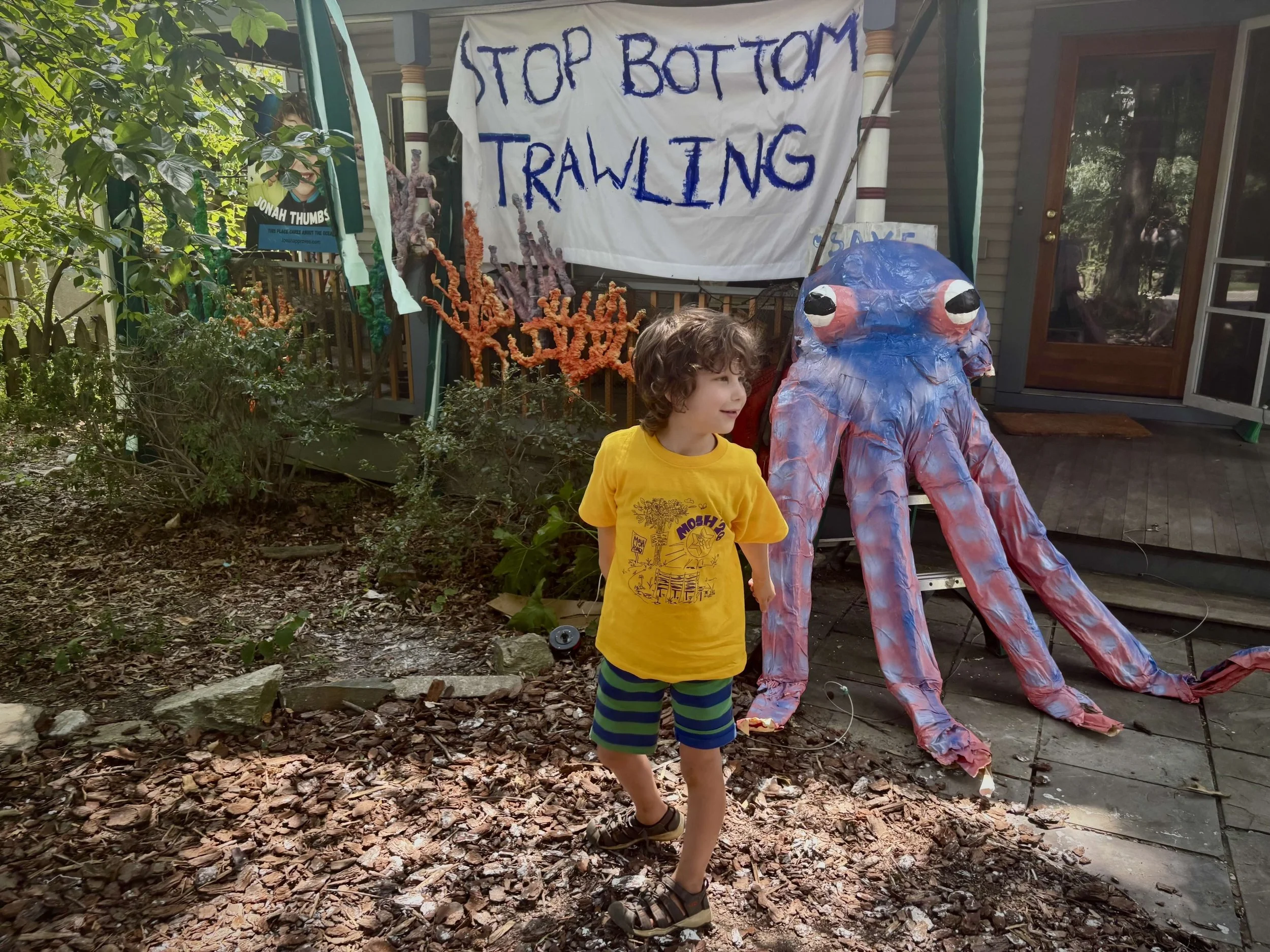
Small Hands, Big Waves: How You Can Help
Saving the ocean floor isn’t a one-person job—it takes an entire ecosystem of people working together. When heavy industrial nets drag across the deep sea, they destroy the fragile habitats that marine life (and our fishing economy) depend on.
But here is the good news: we can stop it. Whether you are ordering dinner tonight, running a local kitchen, or writing laws in Congress, you have a specific role to play in closing the seafloor loophole.
Find your section below and join Jonah's crew!
For Regular People (Consumers)
Ask the Question: Next time you order seafood, ask: "Is this line-caught, or was it caught using bottom trawling?"
Vote with your Fork: Choose sustainably harvested options like diver-caught scallops, rope-grown mussels, or indoor-farmed shrimp.
Support Safe Spots: Look for the "Jonah Approves" badge in local restaurant windows!
For Restaurant Managers & Chefs
Take the Pledge: Commit to auditing your seafood supply chain and removing species caught via destructive bottom trawling.
Get the Badge: Display the official "Jonah Approves" window sticker to show your customers you care about the ocean floor.
Get Featured: Join our online directory of ocean-safe local eateries.
For Policy Makers & Leaders
The Problem: Right now, the vast majority of U.S. Marine Protected Areas (MPAs) still allow industrial bottom trawling. They function as "paper parks"—protected on a map, but actively bulldozed on the ocean floor.
The Solution: Fully protecting the seafloor creates a "Spillover Effect." It turns protected areas into fish nurseries where marine life can safely grow and multiply, eventually spilling over into open waters to increase catches for the commercial fishing industry. It is a win-win for conservation and the economy.
Protect the Parks: Support federal legislation that explicitly bans industrial bottom-contact gear inside National Marine Sanctuaries and MPAs. Surface protection is not enough if the seafloor is destroyed.
Strengthen 30x30: Ensure U.S. ocean conservation frameworks require full benthic (seafloor) protection to qualify toward our national 2030 preservation goals.
Exert Oversight: Push NOAA to rapidly expand "Essential Fish Habitat" designations to safeguard vulnerable deep-sea structures before they are lost.